What is a Bent-axis Motor and How Does It Work?
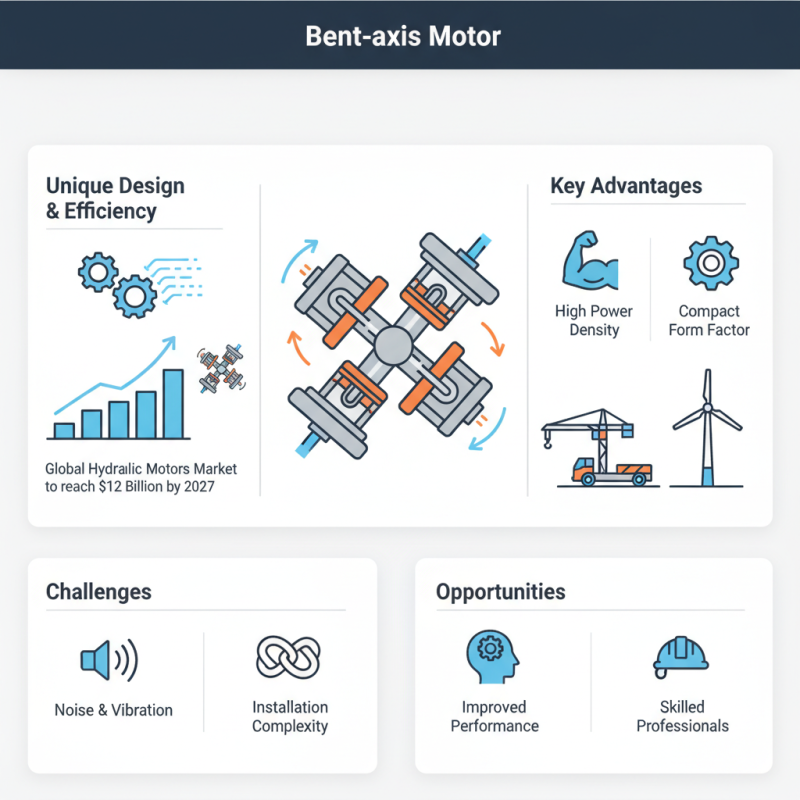
The Bent-axis Motor is gaining traction in diverse industries due to its unique design and efficiency. According to the latest Market Research Report, the global hydraulic motors market is expected to reach $12 billion by 2027. A significant portion of this growth can be attributed to the increasing demand for Bent-axis Motors in various applications. These motors are known for their high power density and compact form factor, making them ideal for hydraulic systems.
Manufacturers are increasingly adopting Bent-axis Motors, particularly in mobile equipment and renewable energy sectors. For example, in wind turbines, these motors improve operational efficiency. However, challenges such as noise and vibration still exist. Despite their advantages, achieving optimal performance often requires fine-tuning, which can complicate installations. This complexity can lead to installation errors if mishandled, underscoring the need for skilled professionals in the field. As industries seek better performance, understanding how Bent-axis Motors work becomes crucial. This technology presents both opportunities and challenges worth exploring.
Definition of a Bent-axis Motor and Its Key Characteristics
A bent-axis motor is a unique type of hydraulic motor. Its design features an output shaft positioned at an angle to the input shaft. This structure allows for efficient transfer of power from the hydraulic fluid to mechanical movement. Bent-axis motors are known for their compact shape and lightweight design. They often handle high pressures and provide smooth operation in various applications.
One key characteristic of bent-axis motors is their ability to deliver high torque at lower speeds. This makes them ideal for specialized machinery. The internal components consist of pistons arranged at an angle. This arrangement enhances their efficiency. However, the angle must be precise. A slight deviation can lead to performance issues. Engineers must closely monitor this aspect during usage.
Another important aspect is their adaptability. Bent-axis motors can be used in multiple domains, such as construction and agriculture. Still, their effectiveness can vary based on application specifics. Maintaining these motors requires careful attention to fluid levels and cleanliness. Neglecting these factors can lead to quicker wear and tear. The balance between performance and maintenance is crucial. Understanding the nuances of bent-axis motors helps in optimizing their use.
What is a Bent-axis Motor and How Does It Work? - Definition of a Bent-axis Motor and Its Key Characteristics
| Characteristic | Description | Advantages | Applications |
| Configuration | A bent-axis motor features an angled shaft, allowing for compact design. | High power density and efficiency. | Used in hydraulic systems and mobile machinery. |
| Operation Principle | Converts hydraulic energy to mechanical energy via rotating components. | Provide smooth operation with low vibration. | Common in construction and agricultural equipment. |
| Efficiency | High volumetric and mechanical efficiency. | Reduced energy loss compared to traditional motors. | Ideal for applications requiring reliable power source. |
| Key Components | Includes housing, rotor, and stator, all precision-engineered. | Robust design enhances durability and longevity. | Popular in aerospace and automotive industries. |
Principle of Operation: How a Bent-axis Motor Generates Motion
A bent-axis motor is a hydraulic device that converts fluid pressure into rotational motion. Its design includes a shaft positioned at an angle, and this unique alignment significantly influences its operation. When hydraulic fluid enters the motor, it applies force at various angles on the angled pistons. This results in a rotational movement of the shaft, generating mechanical power efficiently.
Understanding how each component works together is crucial. Each piston connects to the shaft and pushes against it as the fluid flows through. This direct interaction leads to smooth motion. One downside is that the motor’s efficiency can fluctuate under extreme conditions. It is essential to monitor the hydraulic fluid levels regularly, ensuring optimal performance and longevity.
Tips: Regular maintenance is key. Check for leaks and ensure the fluid is clean. This prevents performance issues. Another tip is to avoid overloading the motor. Excessive load can lead to overheating and eventual damage. Knowing the operational limits can save time and resources in the long run.
Components of a Bent-axis Motor and Their Functions
A bent-axis motor is an intriguing device used to convert hydraulic energy into mechanical motion. Understanding its components is key to grasping how it works. The core elements include the cylinder block, pistons, and the shaft. The cylinder block houses the pistons, which are arranged at an angle to the axis. This design allows for a unique conversion process that enhances efficiency.
Pistons are vital in a bent-axis motor. They move back and forth within the cylinder block. When hydraulic fluid enters, it drives the pistons outward. This motion creates a rotational movement in the shaft. The connection between the pistons and the shaft is critical. Their angles affect the output torque and speed. However, achieving the perfect angle can be challenging. Slight deviations may lead to reduced efficiency.
The shaft itself is where the mechanical energy emerges. It translates the pistons' linear motion into rotational energy. This process can produce issues, such as vibrations or noise, if not properly calibrated. Maintenance is essential, as wear and tear can affect performance. In some cases, users notice unexpected drops in efficiency. Observations like these help in improving future designs. The interplay of these components ultimately determines the motor's overall effectiveness.
Advantages of Bent-axis Motors Compared to Other Motor Types
Bent-axis motors are gaining popularity in various applications. Their unique design offers several advantages over conventional motors. One notable benefit is their high efficiency. These motors convert energy more effectively, leading to reduced operational costs. This efficiency is often achieved through a simple construction that minimizes losses.
Another advantage is their compact size. Bent-axis motors can produce significant torque while being smaller than traditional motors. This makes them ideal for applications where space is limited. In mobile machinery, for instance, these motors can fit into tighter spaces without sacrificing power.
However, there are some challenges. The design can lead to increased wear and tear under heavy loads. Maintenance may be more frequent, which can be a concern for some users. The orientation of the components requires careful alignment. If misaligned, performance might drop. Hence, while bent-axis motors promise notable benefits, potential buyers should weigh these considerations carefully.
Advantages of Bent-axis Motors Compared to Other Motor Types
Applications of Bent-axis Motors in Various Industries
Bent-axis motors are becoming increasingly popular across various industries. Their unique design allows for efficient power transmission. This design minimizes losses, making them ideal for heavy-duty applications.
In the construction industry, bent-axis motors power machinery like excavators and cranes. They offer high torque at low speeds. This feature is crucial when lifting heavy materials. Mining operations also benefit from these motors, providing reliable performance in tough conditions. The motors operate well in harsh environments, where durability is essential.
Tips: When selecting a bent-axis motor, consider the load requirements. Ensure the motor aligns with your specific needs. Additionally, regular maintenance is crucial for extending the motor's lifespan. Simple checks can prevent major failures.
In the manufacturing sector, bent-axis motors drive robotics and conveyors. Their precision enhances productivity. However, the installation process can be complex. Ensure skilled technicians handle the setup to avoid issues. The performance can vary if not installed correctly.