
Top 10 Benefits of Cold Rolled Coil in Manufacturing?
The use of Cold Rolled Coil in manufacturing is pivotal for various industries. According to a report by the World Steel Association, cold rolled steel products constitute a significant portion of the global market. This steel form boasts enhanced surface quality and dimensional precision, making it essential for applications requiring durability and reliability.
Cold Rolled Coil is thinner and more uniform than hot rolled alternatives. It allows manufacturers to produce sharper and more intricate designs. The precision of Cold Rolled Sheets results in optimal product performance while reducing wastage and costs. However, not all manufacturers leverage its benefits effectively.
Some overlook the importance of quality control in the cold rolling process. They may encounter issues like surface defects or inconsistencies. Addressing these concerns can drive better outcomes in production. The future of manufacturing in many sectors could greatly rely on improving the use of Cold Rolled Coil. Solutions may include incorporating advanced technologies and refining production techniques.
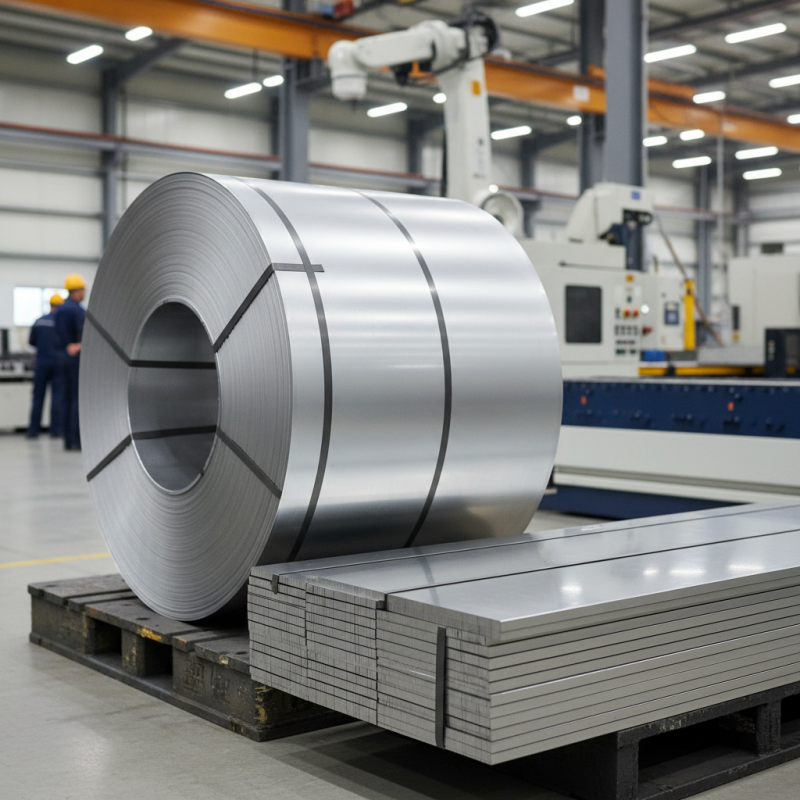
Advantages of Cold Rolled Coil in Cost Efficiency and Production
Cold rolled coil (CRC) is essential in manufacturing due to its efficiency. It offers smoother surfaces and tighter tolerances compared to hot rolled options. This precision saves time and reduces waste, leading to cost savings in production.
Using CRC can significantly lower material costs. The thinner gauge allows for less material usage while maintaining strength. This can be particularly beneficial in high-volume production environments. Manufacturers can produce lighter parts that still meet specifications. However, it's crucial to assess if the reduced thickness impacts your project's integrity.
Tips for using cold rolled coil: Ensure your machinery is compatible with thinner materials. Test the durability of components made from CRC in real-world scenarios. Indirectly, this could lead to unexpected costs if failures occur.
Another advantage is the shorter production cycle. CRC can be processed faster, which accelerates production timelines. Nevertheless, manufacturers should reflect on their capacity to maintain quality during these speed enhancements. Balancing speed with quality is vital for long-term success.
Top 10 Benefits of Cold Rolled Coil in Manufacturing
| Benefit | Description | Cost Efficiency | Production Impact |
|---|---|---|---|
| Improved Surface Finish | Cold rolled coils provide a smoother surface finish, reducing the need for additional cosmetic machining. | Reduces finishing costs. | Enhances aesthetic quality of the product. |
| Tighter Tolerances | Cold rolling allows for tighter tolerances compared to hot rolling, resulting in better fitting parts. | Minimizes wastage during manufacturing. | Improves assembly efficiency. |
| Enhanced Strength | Cold rolling increases the yield strength of materials due to strain hardening. | Potentially reduces material costs by using thinner gauges. | Allows for lighter, stronger components. |
| Increased Efficiency | The cold rolling process is energy-efficient compared to other methods. | Lower energy costs per unit produced. | Enhances overall productivity. |
| Versatility | Cold rolled coils are available in various materials and sizes, suitable for multiple applications. | Reduced inventory costs. | Covers diverse production needs. |
| Better Dimensional Accuracy | Cold rolling enhances the dimensional accuracy of the material, reducing the need for rework. | Cuts costs related to reprocessing. | Streamlines production cycles. |
| Reduced Waste | Minimizes scrap and leftover material during the manufacturing process. | Lower material expenses. | Contributes to sustainability goals. |
| Increased Productivity | Faster processing speeds lead to higher throughput. | Enhances return on investment. | Improves delivery times. |
| Lower Production Cost | Overall savings in production costs compared to hot rolled products. | More economical manufacturing solutions. | Facilitates competitive pricing. |
| Consistent Quality | Cold rolled coils provide consistent material quality throughout production runs. | Reduces variation and quality control issues. | Ensures reliable product performance. |
Improved Surface Finish: A Key Benefit of Cold Rolled Coil
Cold rolled coil (CRC) is a critical component in manufacturing, particularly for its improved surface finish. This finishing not only enhances aesthetic appeal but also adds functional value. According to industry reports, 70% of manufacturers prioritize surface quality when selecting materials. A well-finished surface promotes better paint adhesion and reduces friction. This is particularly crucial in the automotive and appliance industries, where quality directly translates to performance.
While cold rolling can improve surface smoothness, the process isn't without flaws. Surface imperfections, such as slight scratches or inconsistent thickness, can occur. Industry data suggest that about 5% of cold rolled coil products reveal such defects upon inspection. Manufacturers must be vigilant in quality control. Failing to address these issues can lead to increased costs and delays. Nonetheless, a finished product that meets specifications can boost customer satisfaction and foster loyalty.
The versatility of cold rolled coil is evident in its applications across various sectors. From automotive parts to electronic enclosures, the enhanced finish contributes to a product's durability and functionality. However, the industry's reliance on this material necessitates continual improvement in manufacturing processes. Understanding its limitations while leveraging its benefits is key to successful product development.
Enhanced Mechanical Properties of Cold Rolled Coil in Manufacturing
Cold rolled coil is a critical material in manufacturing due to its enhanced mechanical properties. The process of cold rolling significantly improves the strength and durability of the metal. According to the American Iron and Steel Institute, cold rolled steel typically exhibits a tensile strength that is 20% to 30% greater than hot rolled products. This increased strength comes from the finer grain structure formed during the cold rolling process.
However, the benefits do not come without challenges. While cold rolled coils improve strength, they can be more susceptible to cracking if not handled properly. The reduction in thickness during rolling leads to increased stresses, which may require careful consideration during processing. Additionally, the surface finish of cold rolled coils is often superior, with a smooth texture that can lead to better paint adhesion and corrosion resistance. A report from the International Journal of Materials Processing highlights that these coils have a lower yield point, necessitating precise engineering to avoid failure in high-stress applications.
Moreover, cold rolled coils can lead to less waste during manufacturing. Their uniformity allows for more predictable machining and fabrication results. According to the Steel Information Center, this consistency can reduce scrap rates by up to 15%. However, manufacturers must ensure proper quality control. Any deviations in roll thickness can compromise these benefits and lead to production inefficiencies. Balancing the advantages with potential drawbacks is crucial for successful application in the industry.
Top 10 Benefits of Cold Rolled Coil in Manufacturing
This chart represents the impact level of the top 10 benefits of cold rolled coil in manufacturing. The data illustrates how cold rolled coils enhance various mechanical properties, making them a preferred choice in the industry.
Cold Rolled Coil: Versatility Across Various Industries
Cold rolled coil is a remarkable material, known for its versatility across various industries. Its smooth surface and precise dimensions make it a popular choice for manufacturers. From appliances to automotive parts, this material consistently delivers quality. It adapts to different applications, yet sometimes, it does not meet every specific requirement. This can lead to challenges that need addressing.
In the construction industry, cold rolled coil plays a crucial role. It is used in producing framing, roofing, and other structural components. The lightweight nature allows easy transport and handling. However, some may find it less durable under extreme conditions. This raises questions about its reliability when facing harsh environments.
Moreover, manufacturers in the electronics industry rely on cold rolled coil for component fabrication. The thin sheets can be precisely shaped for intricate designs. But, there are instances where minor imperfections can impact functionality. This highlights the need for rigorous quality checks and better manufacturing practices. Regular assessments and improvements are essential for achieving optimal performance.
Sustainability and Energy Efficiency in Cold Rolled Coil Production
The production of cold rolled coils has a significant impact on sustainability and energy efficiency. One key aspect is the reduction of waste during manufacturing. Unlike hot rolling, cold rolling often requires less energy in the refining process. Manufacturers can significantly lower their carbon footprint by optimizing energy use.
Moreover, the recycling of materials used in cold rolled coil production is vital. Recycled steel requires less energy and emits fewer greenhouse gases. Using recycled materials helps divert waste from landfills, promoting a circular economy approach. Yet, the challenge remains in sourcing high-quality recycled material consistently.
Energy efficiency also extends to the end-use phase. Cold rolled coils are often utilized in energy-efficient appliances. However, not all manufacturers prioritize sustainable practices. Some still rely on outdated methods that waste resources. Striking a balance between production needs and sustainability goals invites further reflection. This is crucial for the betterment of the industry and the planet.
