Top Artificial Lift Technologies Tips for Optimizing Oil Production?
In the oil industry, maximizing production is crucial. Companies often rely on various methods, including Artificial Lift Technologies. These technologies enhance the flow of oil from wells to the surface. They play a significant role in improving overall efficiency. Yet, not every solution is perfect.
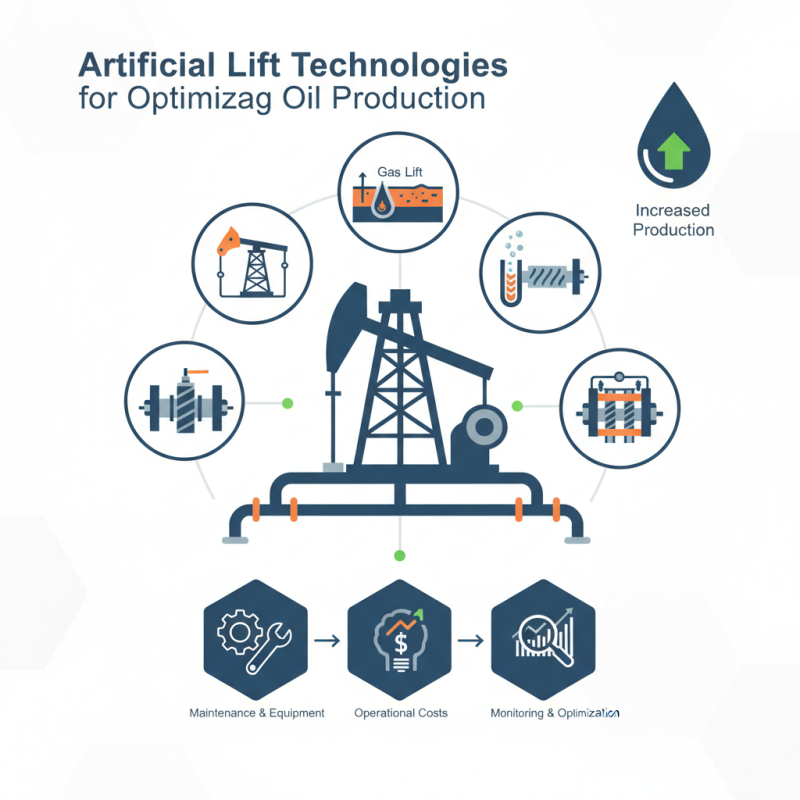
Artificial Lift Technologies encompass several techniques. These range from pumps to gas lift mechanisms. Each has its own advantages and drawbacks. For instance, rod pumps are common but may require frequent maintenance. Gas lifts can optimize production but might not be suitable for all reservoirs. It’s vital to choose the right technology based on specific field conditions.
Implementing these technologies is not without challenges. Many operators face issues such as high operational costs and equipment failure. Continuous monitoring and optimization are necessary to overcome these hurdles. Understanding the limitations of each method can lead to better decision-making. Achieving optimal oil production is a constant process, needing both innovation and reflection.
Key Considerations in Selecting Artificial Lift Systems for Oil Wells
Selecting the right artificial lift system is crucial for optimizing oil production. Various factors play significant roles. For instance, well depth and pressure conditions must be evaluated carefully. Reports from the Society of Petroleum Engineers indicate that gas lift systems can enhance oil recovery by 20% in some cases. However, these systems are not universally effective.
The type of reservoir and fluid characteristics also influence choices. Heavy oils may require different intervention methods, such as sucker rod pumps. Studies show that electrical submersible pumps are effective in wells producing from 500 to 10,000 barrels per day. Yet, operational challenges like power costs can limit their viability. Hence, a comprehensive cost-benefit analysis is essential.
Furthermore, maintenance requirements must not be overlooked. Improper maintenance can lead to suboptimal production rates. Equipment failures often result in costly downtimes. A report emphasized that 25% of artificial lift failures are attributed to inadequate maintenance practices. Therefore, operators must regularly assess their systems to ensure efficiency and performance reliability.
Understanding Different Types of Artificial Lift Technologies and Their Applications
Artificial lift technologies play a crucial role in maximizing oil production. Understanding their types is essential for optimization. Common methods include rod pumps, gas lift systems, and electrical submersible pumps (ESPs). Each technology has unique applications and efficiency levels. For example, rod pumps can achieve up to 80% efficiency in lower production scenarios. They are simple yet effective for conventional oil fields.
Gas lift systems utilize injected gas to reduce fluid density, allowing for easier flow. This method can dramatically improve production rates, particularly in mature fields. A study shows gas lift can boost output by 50% in some cases. However, it requires careful management of gas supplies. Meanwhile, ESPs are ideal for deep wells, providing high volume output. They can operate efficiently in challenging conditions but are often more complex to install and maintain.
Despite these advantages, each technology has limitations. Compatibility with reservoir conditions varies, affecting overall performance. Additionally, costs associated with installation and maintenance can deter choices. A detailed assessment of the reservoir's characteristics is crucial. This analysis helps determine the most suitable artificial lift approach, ensuring better long-term strategies for oil production.
Best Practices for Integrating Artificial Lift into Oil Production Operations
Integrating Artificial Lift Systems into oil production operations can significantly enhance output. One study shows that wells with artificial lift can experience production increases of up to 70%. However, this potential is often underutilized due to a lack of proper integration and management practices. Many operators overlook the importance of well monitoring in optimizing lift systems. Without real-time data, adjustments may lag and efficiencies can be lost.
It's critical to assess the specific needs of each well before implementing artificial lift. Different reservoirs require different strategies. For instance, gas lift might be more effective in high-pressure environments, while electric submersible pumps excel in heavy oil territories. Data from the Society of Petroleum Engineers highlights that aligning the lift method with the reservoir characteristics can boost efficiency by nearly 30%. Additionally, continuous training for operational staff can reduce misunderstandings about maintenance needs.
While adopting new technologies, companies often face challenges. Some operators may resist change due to legacy systems still in place. The transition requires a cultural shift, alongside investment in training for personnel. Despite advancements, some companies still report inefficiencies, indicating the need for ongoing evaluation of existing practices. Regularly revisiting integration strategies can unveil new optimization opportunities, thus ensuring that artificial lift systems truly add value.
Monitoring and Maintenance Strategies for Optimal Lift Performance
Effective monitoring and maintenance strategies are crucial for optimizing artificial lift performance. Regular inspection of components is essential. Losing time on maintenance can lead to inefficiencies. According to industry reports, unplanned downtime can cost operators up to $200,000 per day.
Implementing a predictive maintenance strategy can significantly improve performance. Using sensors for real-time data can help. These systems provide alerts on wear and tear, allowing for timely interventions. Studies show that facilities using predictive maintenance can reduce maintenance costs by 25-30%.
Here are some tips:
- Regularly calibrate instruments to ensure accurate readings.
- Establish a routine for data analysis to track performance trends.
- Document all maintenance activities; examining patterns over time improves decision-making.
Be mindful of pump performance.
Inconsistent lift rates can signal underlying issues. Regularly reviewing this data can prevent significant failures down the line. It’s essential to invest in
continuous improvement strategies to maximize oil production.
Innovative Technological Advances in Artificial Lift Techniques for Enhanced Yield
Innovative technological advances in artificial lift techniques are transforming oil production. The industry seeks efficiency and improved yields. One prominent method is the use of electric submersible pumps (ESPs). These devices can handle high flow rates effectively and adapt to various well conditions. But they require careful monitoring. Overuse may lead to equipment failure.
Another emerging technique is gas lift, which is gaining traction for its simplicity. It uses gas to reduce fluid density in wells. This process can enhance production significantly. However, the optimal gas-to-oil ratio remains a critical factor. Operators often face challenges in achieving consistent results.
Recently, the integration of data analytics and IoT technology has paved the way for smarter operations. Real-time monitoring can help prevent issues before they escalate. Yet, reliance on technology carries risks, such as data overload. Striking a balance between automation and human oversight remains essential for long-term success.
Top Artificial Lift Technologies for Optimizing Oil Production